TruthFinder gives you instant access to criminal records, court filings, arrest records, address history, and more — pulling from millions of public databases in real time.
Search Public Records on TruthFinderTruthFinder.com — Affiliate link, commission earned if you subscribe.
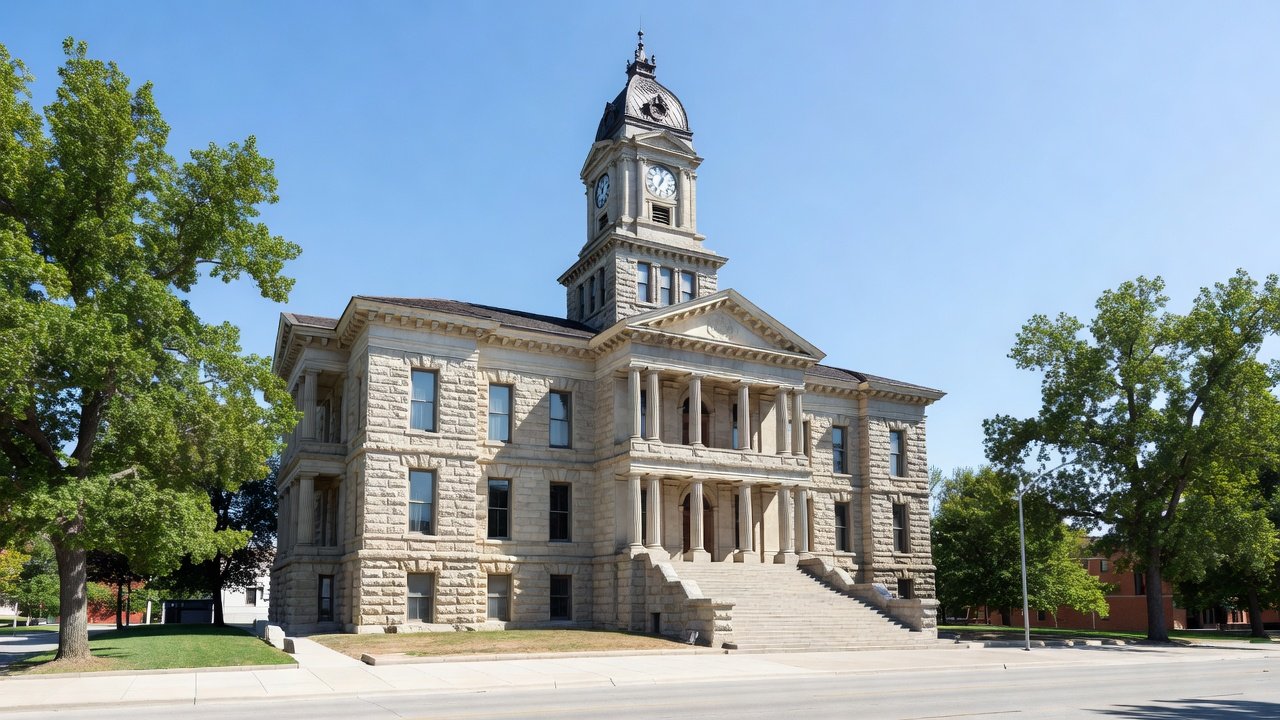
Kansas maintains a broad tradition of government transparency, making a wide range of records accessible to the public through state and county agencies. Whether you need court documents from a Wichita district court, a criminal history check through a state law enforcement agency, or a birth certificate from Topeka, understanding exactly which Kansas office holds what record saves significant time and effort.
What Counts as a Public Record in Kansas
Kansas operates under the Kansas Open Records Act (KORA), a state law that establishes a strong presumption in favor of public access to government documents. Under KORA, any record that is made, maintained, or kept by or for a public agency is presumed to be open unless a specific exemption applies. This covers an enormous range of materials: court filings, arrest logs, property tax records, government contracts, meeting minutes, and much more.
That said, KORA contains dozens of recognized exemptions. Records involving personal medical information, certain juvenile proceedings, ongoing law enforcement investigations, and personnel files may be withheld in whole or in part. The burden, however, falls on the government agency to justify why a record is being withheld — not on the requester to prove why they deserve it.
It is worth noting that "public record" does not always mean "free record." Agencies in Kansas are generally permitted to charge reasonable fees for the cost of reproduction and, in some cases, staff time spent locating records. Fee schedules vary considerably by county and agency type.
How to Search Kansas Court Records
The Kansas Judicial Branch operates the state's trial courts through a unified district court system organized by judicial district. Each of Kansas's 105 counties is served by a district court, and those courts handle civil, criminal, family, probate, and small claims matters. Above the district courts sit the Kansas Court of Appeals and, at the top, the Kansas Supreme Court.
For many users, the most practical starting point is the Kansas Judicial Branch district court records search, an online portal maintained by the state judiciary. This tool allows you to look up case information by party name or case number across participating districts. Not every case type or every county's historical records are fully digitized, so older filings or sealed matters may not appear online.
When online access is insufficient, the county clerk of the district court is the official custodian of case files. You can visit the clerk's office in person or submit a written request to obtain physical copies of pleadings, judgments, and other documents. Fees for certified copies and plain copies differ and are set at the county level, so it is best to contact the specific clerk's office — found by searching for the relevant county district court by name — before visiting.
Appellate court opinions from the Kansas Court of Appeals and Kansas Supreme Court are published on the Kansas Judicial Branch website and are generally available to the public at no charge. These are useful if you are researching how a particular legal issue has been decided in Kansas rather than tracking an individual trial-level case.
Kansas Criminal Records and Background Checks
The Kansas Bureau of Investigation (KBI) is the state agency responsible for maintaining the Kansas criminal history repository. The KBI collects arrest, charge, and disposition data submitted by law enforcement agencies, prosecutors, and courts throughout the state and compiles them into individual criminal history records.
There are two main types of checks available through the KBI:
- Name-based checks: These searches are conducted using a person's name and date of birth. They are faster and less expensive but carry a higher risk of false matches or missed records because they rely on identifying information that can be shared by multiple people or reported inconsistently.
- Fingerprint-based checks: These are more definitive because fingerprints serve as a unique identifier. Fingerprint-based checks are required for many professional licensing applications, employment in regulated industries such as healthcare and education, and adoptions. They typically take longer and cost more than name-based searches.
Who can request what depends on the purpose. Kansas law distinguishes between a person requesting their own record (for which the full record is available), employers or agencies conducting background checks for specific regulated purposes, and general public requests. For most members of the general public, only conviction data — not arrest records without disposition — may be available depending on the access level. To initiate a request, search for the Kansas Bureau of Investigation's criminal history records services directly through the KBI's official website.
If you are simply trying to do an informal background check on someone for personal reasons, consumer people-search services can surface publicly available information. However, be aware that those tools are not compliant with the Fair Credit Reporting Act (FCRA) and cannot legally be used to screen job applicants, evaluate tenants, or make credit decisions. For those purposes, you must use a certified FCRA-compliant consumer reporting agency. You may also want to review whether a free background check option suits your needs, and always consider is it legal to background check someone before proceeding.
Vital Records: Birth, Death, Marriage and Divorce
The Kansas Department of Health and Environment, Office of Vital Statistics is the central state repository for birth certificates, death certificates, marriage records, and divorce records. This office maintains records going back to state-mandated registration, though the completeness of early records varies.
Vital records in Kansas are restricted records, not fully open public records. Access is generally limited to the person named on the record, immediate family members, legal guardians, and authorized representatives. You will typically need to provide proof of identity and, depending on the record type, documentation of your relationship to the subject.
Requests can be submitted by mail or in person through the Office of Vital Statistics in Topeka. Some county district court clerks also have jurisdiction over certain marriage and divorce records, since those proceedings originate at the county level. If you are looking for a divorce decree, the clerk of the district court in the county where the divorce was filed is often the better starting point for a certified copy.
Fees apply to all vital record requests, and expedited processing options may be available for an additional charge. For genealogical research involving records that are sufficiently old, access rules may be somewhat relaxed, but you should confirm current policy directly with the Office of Vital Statistics.
Property, Business and Other Kansas Records
Property records in Kansas are maintained at the county level. The county appraiser's office assesses property values for tax purposes, and those records — including ownership information, assessed valuations, and property characteristics — are generally available to the public. The county register of deeds records property transfers, mortgages, liens, and easements. Both offices typically maintain searchable online databases, though the sophistication of those systems varies by county. Larger counties like Johnson, Sedgwick, and Wyandotte tend to have more robust online tools.
For business records, the Kansas Secretary of State is the central filing office. The Secretary of State's business entity database allows anyone to look up corporations, limited liability companies, partnerships, and other registered entities by name. You can typically find the registered agent, formation date, current standing, and filed documents. This is particularly useful for verifying whether a business is in good standing before entering into a contract.
Other records worth knowing about include city and county government meeting minutes (available through individual city or county websites), Kansas Unemployment Insurance records (through the Kansas Department of Labor for those with a direct interest), and professional license verifications through the relevant licensing board for each profession.
Filing a Public Records Request in Kansas
Submitting a KORA request in Kansas does not require a special form, though many agencies provide one for convenience. Here are practical steps to follow:
- Identify the correct custodian. KORA requests must go to the agency that actually created or maintains the record. Sending a request to the wrong office causes delays. Search for the specific state or county agency by name to find current contact information.
- Be as specific as possible. Name the record type, date range, subject matter, and any relevant names or case numbers. Vague requests invite broader searches that take longer and cost more.
- Make the request in writing. While Kansas law does not require written requests, having a written record protects you and gives the agency a clear reference point.
- Expect fees. Agencies may charge for copying, electronic delivery, and in some cases staff time. Ask for a fee estimate before authorizing a large search.
- Expect exemptions. If a record is partially withheld, the agency should tell you which exemption applies. You have the right to appeal a denial, first through the agency itself and then through the courts if necessary.
- Know your timeline. Kansas law requires agencies to respond promptly. If an agency anticipates a delay, it should notify you.
For reference on how this process compares across the country, see our public records guides for other states.
Frequently Asked Questions
Are Kansas arrest records available to the public?
Arrest logs maintained by local law enforcement are generally available under KORA because they are records of a government function. However, a full criminal history record from the Kansas Bureau of Investigation (KBI) showing arrests, charges, and dispositions has access restrictions depending on the requester's purpose. Conviction records are more broadly accessible than arrests that did not result in conviction.
Can I look up someone's court case online in Kansas?
Yes, to a significant degree. The Kansas Judicial Branch district court records search provides online access to case information for many districts and case types. However, certain records — such as those involving juveniles, sealed cases, or adoption proceedings — are not publicly accessible online or at all. For complete records, contact the clerk of the relevant district court directly.
How do I get a copy of my own criminal history in Kansas?
You can request your own criminal history record from the Kansas Bureau of Investigation. This is sometimes called a personal history check or a "challenge" request. You will typically need to submit identification, and the KBI can help you understand the process for disputing inaccurate information if needed. Search for the KBI's criminal history services page for current instructions and fees.
How far back do Kansas vital records go?
The Kansas Department of Health and Environment, Office of Vital Statistics holds records going back to statewide registration requirements, though early records from the late 19th and early 20th centuries may be incomplete. For older genealogical research, county-level records, church records, and the Kansas State Historical Society can supplement what the state office holds.
Does Kansas have a centralized online portal for all public records?
Kansas does not have a single portal for all public records. Different records are held by different agencies — court records through the Kansas Judicial Branch, criminal history through the KBI, vital records through the Department of Health and Environment, property records through individual county offices, and business records through the Secretary of State. Each agency must be contacted separately, though many have their own online search tools.