Recommended Search Tool
TruthFinder
★★★★★
TruthFinder gives you instant access to criminal records, court filings, arrest records, address history, and more — pulling from millions of public databases in real time.
Search Public Records on TruthFinder
Sponsored Search — Results from all US public record databases
TruthFinder.com — Affiliate link, commission earned if you subscribe.
TruthFinder.com — Affiliate link, commission earned if you subscribe.

- Address an email or letter to the “Records Access Officer” of the agency.
- In the subject line of your email, write “FOIL request” to expedite the processing of your request.
- Specify the records you need.
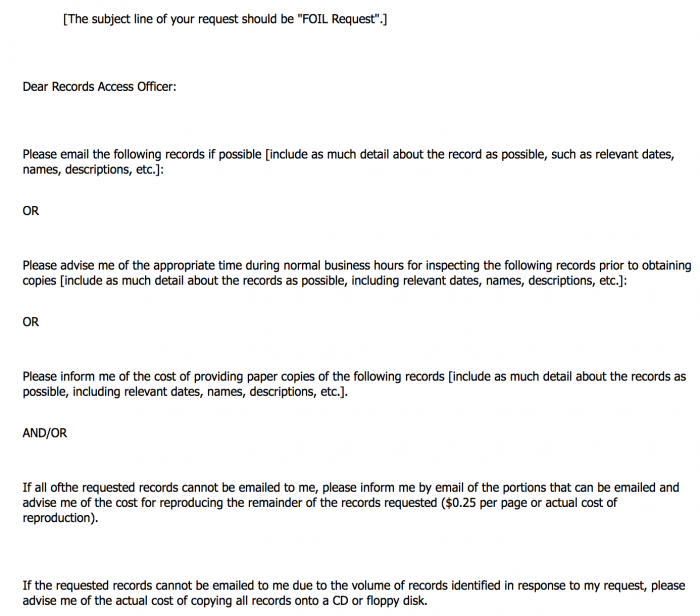 You do not need to explain why you seek access to the public record.
However, reasons you may want to access public records include the following:
You do not need to explain why you seek access to the public record.
However, reasons you may want to access public records include the following:
- You are filing a lawsuit.
- You are doing research.
- You are appealing a conviction.
- You need clarification about statutes, bylaws, or legislation.
- You want to know whether someone in your community has been breaking the law.
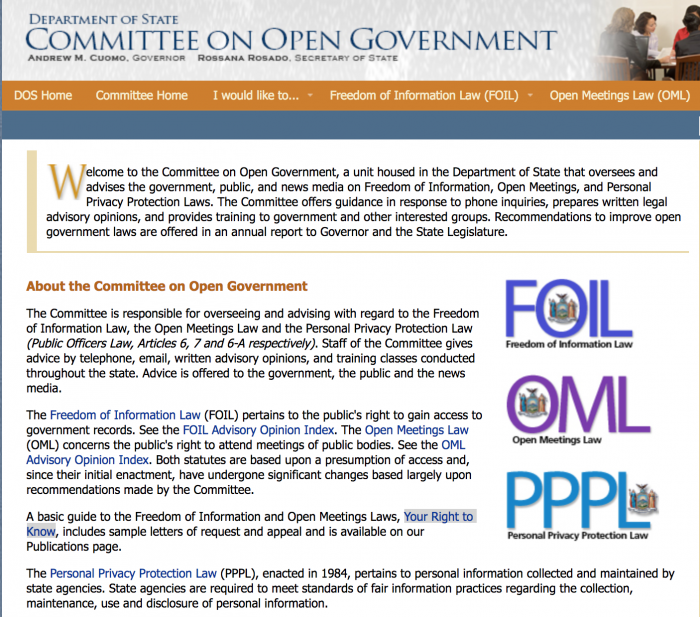 Where Do I Send My Request?
All requests must be submitted directly to the applicable agency, committee, public authority, or council.
This article will help you locate the appropriate agency you need to write, in order to request the public records you seek.
Until recently, there was no central clearinghouse for all New York state or municipal records. You had to painstakingly research which government agency or department to email.
In 2018, the State of New York made it much easier for you to make a FOIL request.
Using this website, you can file a request for public records directly, and can even send the same request to more than one agency, which may be necessary in some cases.
Where Do I Send My Request?
All requests must be submitted directly to the applicable agency, committee, public authority, or council.
This article will help you locate the appropriate agency you need to write, in order to request the public records you seek.
Until recently, there was no central clearinghouse for all New York state or municipal records. You had to painstakingly research which government agency or department to email.
In 2018, the State of New York made it much easier for you to make a FOIL request.
Using this website, you can file a request for public records directly, and can even send the same request to more than one agency, which may be necessary in some cases.
 There are dozens and dozens of local and state agencies that hold public records you can access.
Examples of New York state and municipal agencies you can write include:
There are dozens and dozens of local and state agencies that hold public records you can access.
Examples of New York state and municipal agencies you can write include:
- Council on the Arts
- Department of Civil Service
- Department of Financial Services
- Department of Health
- Department of Labor
- Department of Motor Vehicles
- Department of State
- Department of Taxation and Finance
- Developmental Disabilities Planning Council
- Division of Human Rights
- Gaming Commission
- Long Island Power Authority
- Office for the Prevention of Domestic Violence
- Roosevelt Island Operating Commission
- Workers Compensation Board
- Legislative proceedings
- The full text of bills and laws
- Fiscal and budget information
- Transcripts or minutes of public meetings
- Internal or external audits subject to public inspection
- Administrative or staff manuals that might relate to occupational health and safety compliance
- Official dissenting opinions filed by committee members
- Voting records of public officials
- Files or documents like municipal maps or archived documents
- An individual’s credit history
- Personal medical history
- A person’s employment history
- A list of names for marketing or fundraising purposes
- The personal or identifying details have been deleted from the record.
- The person about whom the record refers offers explicit written consent to disclose the information.
- The person provides proof of identity for accessing his or her own records.
- You are applying for a job or a professional license and an employer or licensing agency has “statutory access” to your records.
- You need to submit a request in an email or letter to the appropriate state or municipal agency.
- Give as much detail as possible in your request, including subject matter, names, dates, and any information that can be used to process your request.
- The agency is obliged to help you, but if you do not have the information needed to locate a specific record, your request may be denied.
New York Background Checks
You can request your own arrest records if you have the proper identification. In some cases, an employer may be entitled to request an applicant’s or an employee’s arrest records. However, most employers in the state of New York cannot require you to provide arrest records as a condition of employment. Hospitals and other healthcare organization, and also New York government agencies may, however, require arrest records as a condition for hire or licensure. The New York State Police maintains arrest records. You can apply for a FOIL request for your arrest records using this form.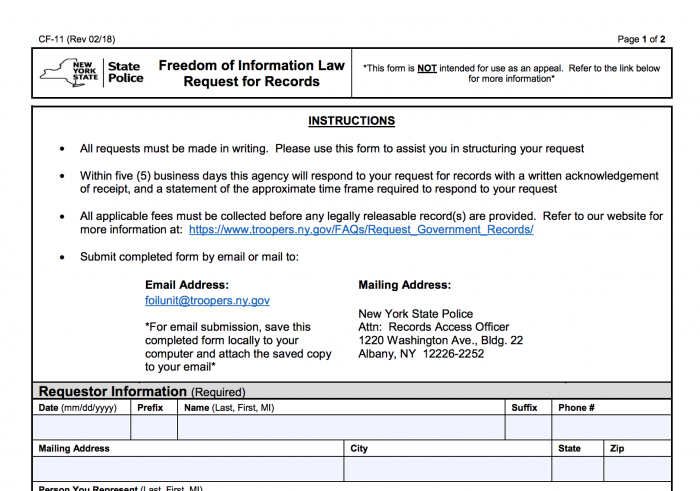
New York Court Records
Court records are also covered under FOIL. You can seek access to New York State court records here. Under the New York State Unified Court System, you can even access court records (such as proceedings and decisions) related to:- Veterans Courts
- Sex Offence Courts
- Community Courts
- Human Trafficking Courts
- Case Type
- Attorney Names
- Presiding Judge
- Docket Numbers
New York Criminal Records
Your criminal history records can be accessed through the New York State Division of Criminal Justice Services. You can access your own criminal records through the New York State Division of Criminal Justice Services. Accessing Someone Else’s Rap Sheet If you are an employer seeking background checks on potential or existing employees, you can also make a request through the New York State Division of Criminal Justice Services. However, it is important to keep in mind that state and federal laws may prohibit you from accessing that information. New York State labor laws expressly prevent employers from discriminating against individuals with arrest or criminal records. For more information, see the New York State Department of Labor website. Can Employers Refuse to Hire Me if I Have a Criminal Record? Sometimes. In certain job sectors, an employer can refuse employment to individuals convicted of some felonies, especially violent crimes and sex crimes. An employer may have the right to access criminal history records, including arrest records, but cannot do so arbitrarily. Important Information About Discrimination It is also important for employers to keep in mind that the United States Equal Employment Opportunity Commission (EEOC) prohibits discrimination. While employers are usually entitled to require applicants to release their own criminal history records, discriminating on the grounds of prior arrests may constitute a violation of EEOC laws. In the State of New York, “Access to criminal history records for employment or licensing is only permitted if there is a state law, federal law, or local law of a New York State village, town, city or county that specifically authorizes a fingerprint-based criminal history record check for employment or licensure.”New York Jail / Inmate / Probation / Parole Records
In the State of New York, the Department of Corrections and Community Supervision maintains jail and inmate records, which you can search here. If you want to locate an inmate in one of the state’s correctional facilities, you can search the database of current and former inmates. You may need to have on hand the full name of the inmate and admission date, as well as the inmate identification number. Request for information may be denied in the case of juvenile inmates. Likewise, the request for information on inmate records may be denied to protect the individual’s privacy. An attorney at law may access jail, inmate, probation, and parole records for a client.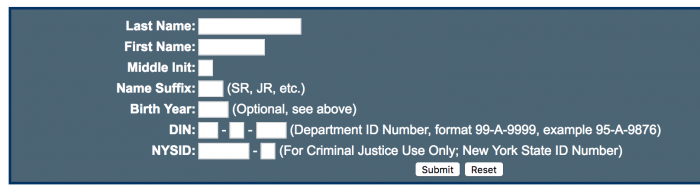
New York Health Records
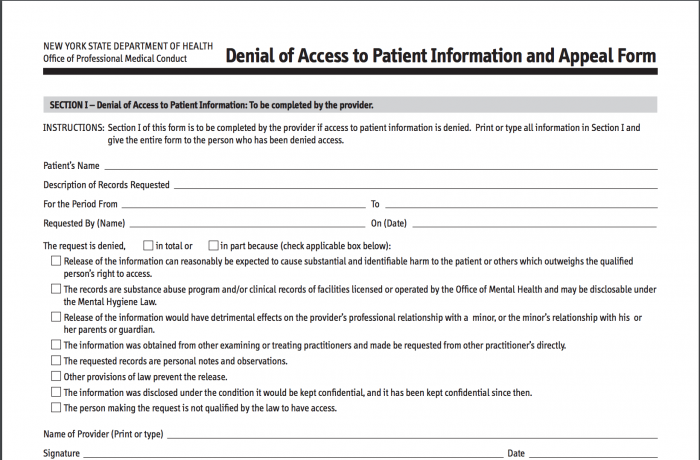
Hospitals and physicians in the State of New York are required by law to keep health records, including medication and hospitalization records, for a minimum of six years after the patient’s last visit. The same is true for home health care providers, physician assistants, physical therapists, social workers, dentists, and other care providers. Obstetrical records may need to be kept even longer—until the child is 19 years of age. The New York State Public Health Law does give you the right to access your health records, even if you are behind in your payments. Furthermore, the hospital and the physician are prohibited from charging you a fee for accessing your own health records. This information is protected under the Freedom of Information Law. In most cases, the executors or administrators of a deceased person’s estate may also have access to the individual’s health records for legal purposes such as settling a dispute. Keep in mind:- Your health records can be released only to you or, if you are a minor, to a parent or legal guardian.
- Insurance companies, corporations, and even other healthcare providers are not automatically entitled to access your health records.
- You will not have to pay for the service of retrieving your health records unless you make a special request for printouts.
- The healthcare provider must respond to your request within ten days of receiving it.
- The following types of records may not be eligible for release:
- Personal notes from nurses or practitioners
- Information that was expressly meant to be kept confidential
- Information that the practitioner believes would be harmful to disclose for whatever reason
- Substance abuse records
New York Vital Records
Vital records consist of birth, death, and marriage certificates that are kept on file in the State of New York. You may need access to vital records for a number of reasons, including:- Legal name change
- Divorce or remarriage
- Application for permanent residency or citizenship
- Adoption applications
- Birth certificates
- Marriage certificates
- Divorce certificates
- Death certificates
- Fetal death certificates
- Genealogy records
- Adoption records
 Balancing Privacy with Freedom of Information
A democracy only functions well with transparency, when the public has access to government records.
Similarly, in a democracy, the state should never disallow access to your own personal information unless doing so would endanger the public in some way.
New York State law achieves a balance between protecting your privacy and promoting the tenets of democracy and freedom of information.
'
Balancing Privacy with Freedom of Information
A democracy only functions well with transparency, when the public has access to government records.
Similarly, in a democracy, the state should never disallow access to your own personal information unless doing so would endanger the public in some way.
New York State law achieves a balance between protecting your privacy and promoting the tenets of democracy and freedom of information.
'
Search Public Records